

How to Prevent Cancer?
Preventive Cancer isn’t just a medical term, it’s a way of thinking. Nowadays it is most important to focus on prevention. The Word Cancer, that can shake everyone’s calm. Maybe you’ve watched someone fight. Maybe you’ve wondered what you could do differently. Here’s the thing: it’s not all random. Not completely out of your hands. It starts quietly. It’s a small thought of someone’s like “What if it happens to me?”
Research says nearly 40% of cancers are preventable. That’s not a small number. That’s millions of lives. Millions of choices that could change everything.
Understanding preventive cancer helps you make choices that reduce your risk early. So let’s talk. Not like a lecture. But like a friend sharing what really matters — how to live in a way that makes cancer less likely to show up at your door.
What Is Preventive Cancer?
Preventive cancer focuses on reducing risks before any disease begins.It’s not about any type of magic pills or immediate fixes. It’s about awareness. Choices and habits that guard your body before anything goes wrong. Doctors call it primary prevention — stopping cancer before it even begins. And secondary prevention — catching it early if it tries to start trouble. Both matter and save lives.
Why Cancer Prevention Matters?
The idea of preventive cancer becomes important when we realise how many risks can be controlled. People often shrug it off. “Cancer just happens,” they say. But that’s only half true. The other half is Lifestyle. Your environment. What you eat and how you move. Along with this your breathing environment also matters.
Studies show 1 out of 3 cancers can be prevented nowadays. A better science and technology with advanced treatments making it possible. Just by living smarter it’s easy. Because every healthy meal, every walk, every “no thanks” to a cigarette — it’s like telling cancer, not today.
It’s not about being perfect. Being aware is important.
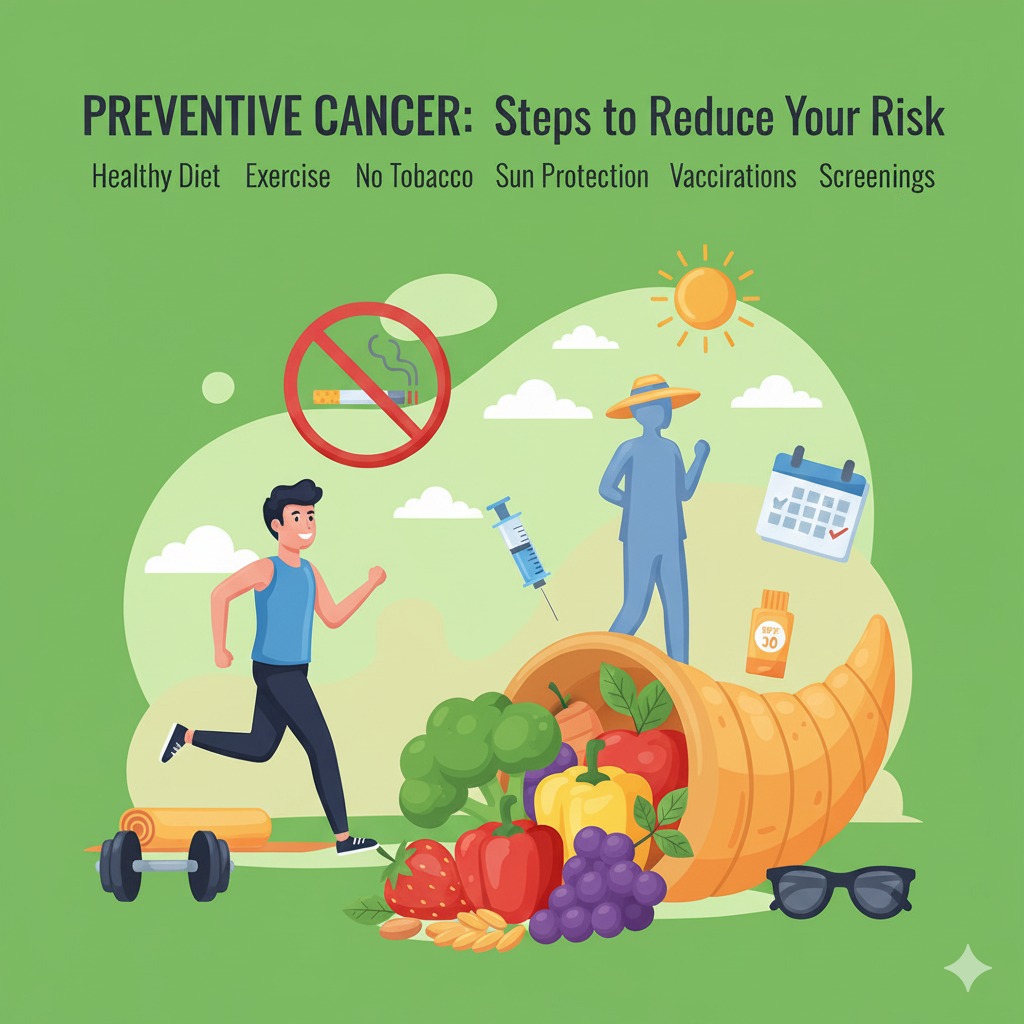
Lifestyle Choices That Reduce Cancer Risk!
Most lifestyle changes connected to preventive cancer are simple and practical. There’s no single cause. No single cure. But patterns—yes. And that patterns we can change.
Tobacco.
Still the biggest villain. Whether it’s smoke or chew, it kills more people than most realize. If you can quit, even after years, your body begins healing almost immediately.
Alcohol Risks.
Tricky one. A glass once in a while is maybe fine. But often, it sneaks in daily. Slowly raising risk for breast, liver, and colon cancers. Say “No”, the better.
Weight, Movement, and Sleep.
Obesity isn’t just a number on a scale. It’s linked to cancer, hormones, and Inflammation. The science is clear. Walk daily,dance regularly, and clean yourself. Move your body how and whenever you can. And 8hr sleep is mandatory. The body fixes itself while you rest. So, this time is must and important.
Sometimes simple steps can be big prevention steps. Try one after another. That’s how change happens.
Foods That Help Lower Cancer Risk!
Diet plays a major role in preventive cancer because nutrition directly influences cell protection. Food is more than taste. It’s code. Information for your body. Vegetables, fruits, legumes — they tell your cells how to protect you. Color is your friend. Greens, reds, and oranges that every food carries something for your body needs.
Garlic, onions, broccoli, and tomatoes are mentioned as real foods like prevention. No fancy diets and overthinking. The more natural, and earthy stuff are more likely to be considered. Avoid the usual suspects like processed meats and sugary drinks. Eating too much red meat is not considered as a good diet. You don’t need to be quiet about those foods. Just maintain the balance. Think of food as medicine. But tastier.
How Exercise Supports Cancer Prevention?
Regular movement also supports preventive cancer by improving hormonal balance and immunity. People hear “exercise” but they imagine gyms. Run with treadmills and sweat, and it’s not the actual thing for prevention. Exercise is about energy flow. About your blood moving, your heart pumping, your cells getting oxygen. It helps balance hormones — the same ones that sometimes feed cancer growth.
You don’t need to train like an athlete. Just move 30 minutes a day. A daily walk, stretch, and breathing deep is enough for better prevention. Even small movements add up. They reset your body. They remind you — you’re alive.
Hidden Cancer Risks You May Overlook.
These hidden triggers matter in preventive cancer planning because they build up quietly over time. There are quiet dangers too. The ones we don’t see. The sun, for example. Feels good, right? But too much — and it burns more than skin. UV rays damage DNA. Use sunscreen. Shade. Common sense. Workplace chemicals. Pollution. Even old habits like tanning beds — they add up.
And infections. HPV. Hepatitis B. These viruses are behind certain cancers. The vaccines exist. Use them.
Simple things, but powerful. Because prevention doesn’t always look dramatic. Sometimes it’s just being careful.
Importance of Early Detection.
Even if we remain careful, sometimes something slips through. That’s why early detection exists. Early detection is an essential component of preventive cancer and long-term health safety. Screenings are your second shield.
Mammograms, Pap tests, colonoscopies — sometimes these tests sound scary, but they are saving lives every single day. An early detection can be a better diagnosis. The odds, the treatment, the recovery.
After the age 40, or having any family history—consulting your doctor is a priority for prevention. Prevention isn’t just living healthy — it’s staying alert.
Mental Health and Cancer Prevention-
Stress management is often ignored in preventive cancer, but it influences the body’s healing ability. Here’s something people forget — mental health and cancer are connected. Stress. Fear. Loneliness. They all wear the body down. Slowly, and Quietly. Chronic stress weakens your immunity, and your body stops fighting properly. So breathe. Take breaks. Laugh more. Sleep deeper.
Meditate if you can. Pray if you want. Sit still sometimes and let your body relax, inhale and exhale. This process rewires the brain and healing starts in the mind.
Small Daily Steps That Make a Big Difference-
You don’t have to be a fitness guru or a salad saint. Small habits have a major effect on preventive cancer when followed consistently. Just start. Pick one thing. Maybe skip that cigarette. Add a walk. That’s simple as it is. Avoid chips, and add an apple in your diet. Then another thing next week and another. These choices stack up. And one day, you’ll look back and realize — you’ve built armor. Invisible maybe, but strong.
FAQs on Cancer Prevention:
These questions often come up when people try to understand preventive cancer better.
Q1. Can cancer really be prevented?
Not all, but yes, a good number can. Around 40%. That’s huge.
Q2. What’s the best way to reduce the risk?
Stop smoking. Eat better. Move more. And go for your checkups.
Q3. Does diet really matter that much?
Absolutely. Food shapes your cells. A colorful plate is your best friend.
Q4. What signs should I never ignore?
Strange weight loss, constant tiredness, lumps, or weird bleeding. Go see a doctor.
Q5. How often should I get screened?
Usually from age 40, but it depends. Family history, habits — all count. Ask your doctor.
Final Thoughts for Preventive Cancer:
You can’t control everything. But you can control enough. Prevention isn’t about fear. It’s about freedom. The freedom to live longer, stronger, and better. Take one step today. Just one. Because sometimes, one small choice can rewrite your whole story.