


Hip replacement surgery, when it’s needed? How can it be recovered? Is it totally recovered or not? How much does it cost? These are the common and major questions asked by many people. We are covering all these topics and questions in this blog.
It usually begins quietly. A small pinch in the hip when you walk. A stiff feeling after sitting for a while. Nothing too serious. Something you think will pass. But over time, it doesn’t. The pain grows. When you are trying to do the simple things like climbing stairs, sitting cross legged. It slows you down. At the time of sleep, turning in bed starts to feel like a challenge. As a result, you start avoiding walks. Activities you once enjoyed become tiring. It affects your mood. Your sleep and your entire day. Once this condition starts, doctors often suggest hip replacement surgery.
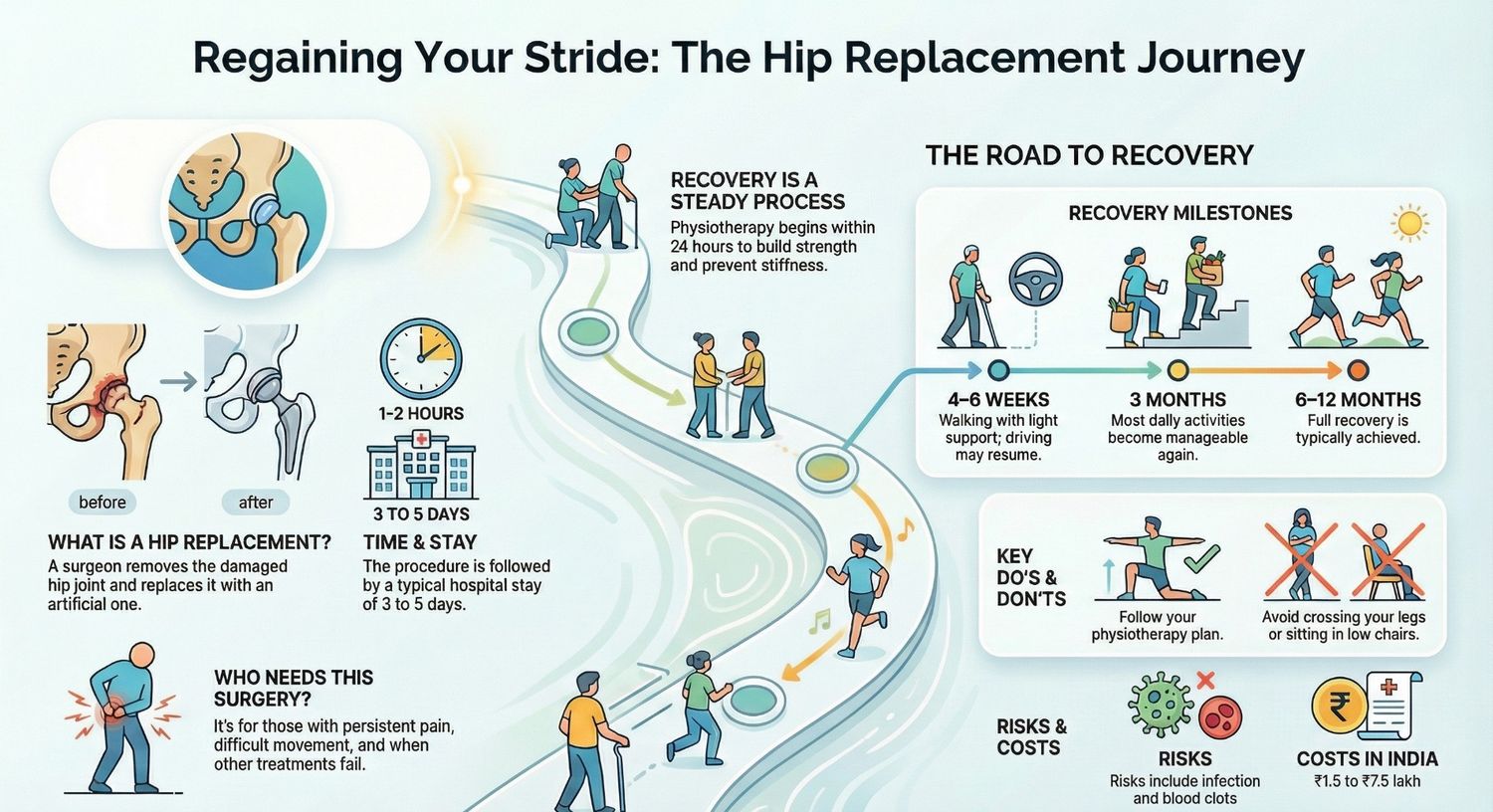
What is hip replacement surgery?
Hip replacement surgery means an artificial hip will be replaced by the damaged one. People think it’s complicated. But it is the most successful orthopedic surgery globally. People reverse their lifestyle, and daily routines.
Who Usually Needs It?
You’d consider it when:
i. Pain is present even while resting
ii. Movement becomes difficult
iii. Arthritis or injury has worn out the joint
iv. Other treatments just aren’t helping anymore
In short: when pain stays longer than comfort.
Types of Hip replacement:
i. Total Hip replacement – where both ball and sockets will be replaced.
ii. Partial hip replacement – Only One of the component will be replaced
iii. Minimal surgery – Surgery with smaller cuts. Faster recovery.
Hip Surgery is necessary if medicines, physiotherapy, or lifestyle changes are not giving relief. It is considered as the best option for recovery.
What happens during the surgery?
The surgery takes 1-2 hours. In some cases, it might be 3-4 hours depending on the situation. You’ll be under anesthesia, so no pain during the procedure.
Before Surgery
Your doctor checks your medical condition, tests, scans. Maybe suggests some exercises. Sometimes, stopping smoking is advised because healing matters.
During Surgery
i. A cut is made near your hip
ii. Damaged bone and cartilage are removed
iii. Artificial joint is fixed in place
iv. Stitches. Final adjustments. Done.
After Surgery
Hospital stay lasts around 3–5 days. Physiotherapy begins early. Often within 24 hours. You may use a walker or support for a while, but movement is encouraged.
When will you recover and feel normal again?
Healing isn’t instant. But progress is steady.
i. 4–6 weeks: Walking with light support
ii. 3 months: Most daily tasks return
iii. 6–12 months: Full recovery depending on health, consistency, and care
Physiotherapy Is Key
It builds strength. Improves flexibility. It prevents stiffness, even simple exercise can make a big difference on recovery, if done regularly.
Things to Do
i. Follow your physiotherapist’s plan
ii. Keep the incision clean
iii. Be patient with your body
Things to Avoid
i. Crossing legs too early
ii. Low sofa or deep chairs (hard to stand up)
iii. Skipping follow-ups
Driving usually resumes around 6 weeks. Work depends on your job, but many return by 6–8 weeks.
Risks and What to Know
Most patients perform well. But still any surgery, there are possible risks.
Common temporary issues:
i. Swelling
ii. Mild stiffness
iii. Temporary pain
Less common complications:
i. Infection
ii. Blood clots
iii. Implant loosening after many years
Choosing a skilled surgeon reduces risks significantly. And post-surgery care plays a big role.
Cost of Hip Replacement in India
When it comes to the cost, it depends on the hospital, quality of the surgery, and experienced surgeons.
Average cost range: Starting from ₹1.5 lakh to ₹7.5 lakh
The cost breakdown:
i. Type of implant (metal, ceramic, hybrid)
ii. Surgeon’s experience
iii. Hospital stay duration
iv. Physiotherapy sessions afterward
Yes, most insurance plans cover this surgery. Just check what percentage is covered before planning.
Why Choosing the Right Surgeon Matters?
Experience shows. In the way they plan. In how smoothly surgery goes. In how confidently they guide recovery. These are the common questions that matter. How many surgeries did they perform? Ideas of which implants are suitable for patients’ age/conditions? What will be the advice for the speed recovery and timeline?
Final Thoughts: Your Steps Can Be Yours Again
It’s difficult to survive with the constant hip pain. It can make life worse. Hip replacement surgery is not just a normal medical procedure. It’s another chance to reverse the lifestyle, your movement, freedom, and independence.