


You walked to the doctor by holding your knee. The pain in your knee for months. The doctor advised for this “it might need arthroscopic surgery”. And you think a bit, and a little scared with the name of surgery. But the truth is something different. The arthroscopic surgery isn’t scary at all. The surgery procedure is precise and controlled, in fact it’s a small one. Let’s discuss what it is , how it can be performed, and how life feels after this surgery?
What Is Arthroscopic Surgery?
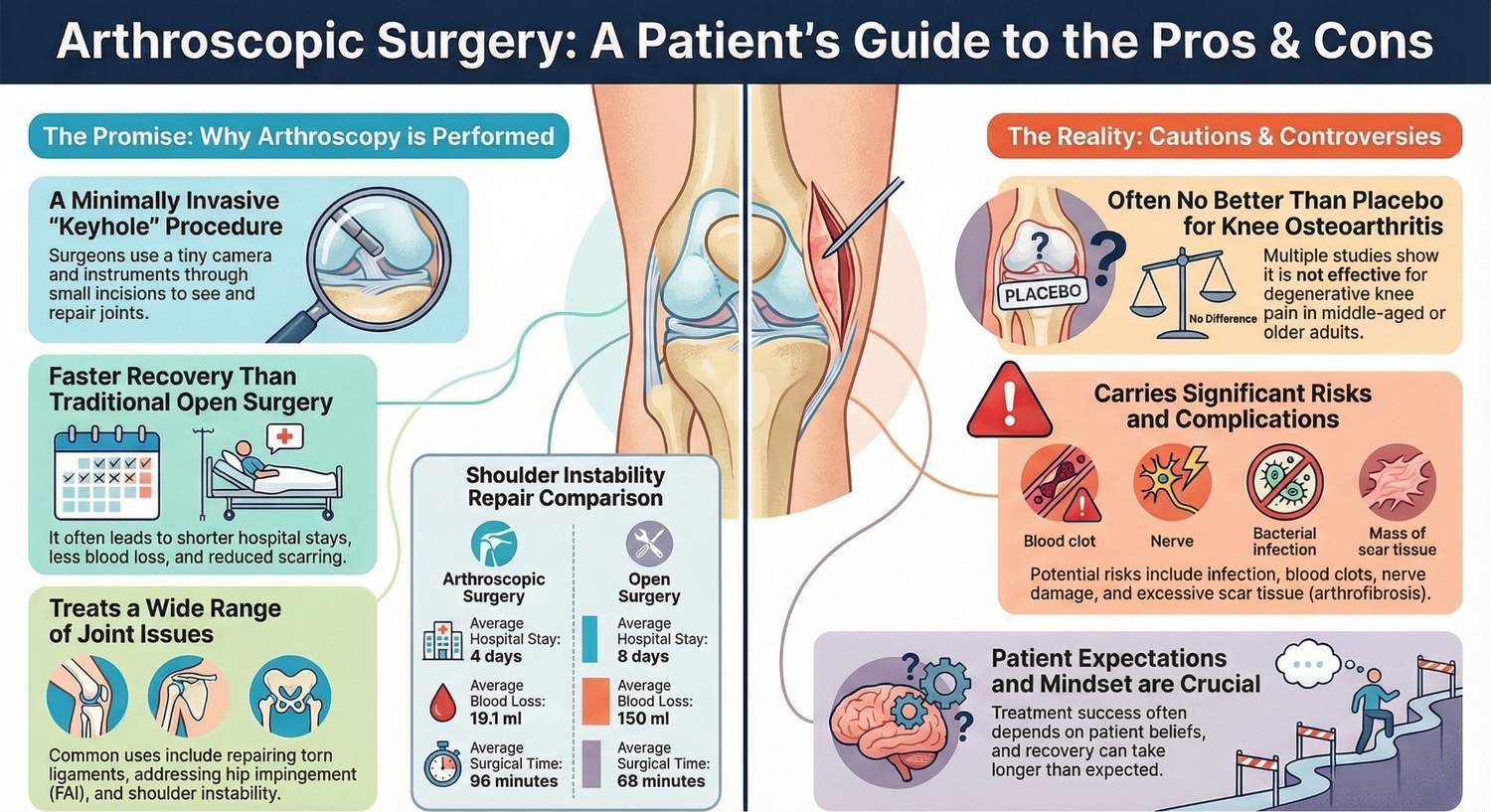
Sometimes your joints get stuck like torn and inflamed. The Issues may come from ligaments, and cartilage. This all acts like machines. Instead of opening the entire machine, doctors use a small camera to make this surgery possible. It’s called Arthroscope. A pencil size tiny camera through a small incision, doctors slip that camera inside your joint. By this procedure a crystal and clear Image can be taken during the surgery.
Through another small opening, special instruments go in. They trim, fix, smooth, or remove what’s damaged. Simple? Almost. But that’s the art behind the word “arthroscopic.”
It’s used mostly for knees and shoulders, but also for hips, wrists, elbows, even ankles.
Less cutting. Less bleeding. Faster healing. So. It’s called “Keyhole surgery”.
What Happens During Arthroscopic Surgery?
Let’s clear this. In the operation room, bright lights above. The nurse adjusts your position for comfort. Depending on the case, general or spinal anesthesia may be given. Once the area is numb, the joint is carefully cleaned and prepared. Then, a small incision — barely half an inch. The arthroscope goes in. The screen lights up.
Inside, it’s like exploring a hidden world — ligaments, tendons, cartilage surfaces, all visible in high-definition. Through another incision. Special tools are then inserted through another small opening. Loose pieces may be removed if needed. Damaged tissue is repaired when required. Sometimes to repair a tear and just take a closer look and diagnose. But you feel nothing. You’re either asleep or comfortably sedated.
When it’s over, Doctors close the tiny holes with one or two stitches. And that’s it. The surgery procedure is done.
Is Arthroscopic Surgery Painful? Is It a Major Surgery?
These are the first questions that come from almost every patient. Let this clear. The doctor says — no, it’s not as painful as you think.
Yes, there’s some soreness. Your joints may feel tight. Maybe stiff and a little bit swollen. But the pain feels mild to moderate. The doctor advised patients to control this by medicines or ice packs.
Now, is it major surgery? No, it’s not a major surgery at all. But anyways it’s a surgery. So, don’t underestimate it. Because every surgery needs care and proper attention. Even if it looks small on the outside, your joint inside still needs to heal. Usually, people walk with support within a day or two. Some even go home the same evening. It depends on the joint and the condition doctors treat.
Recovery and Healing Time
This is a matter more than a surgery itself. After arthroscopy, your recovery moves in stages. The first 24 hours — you have to rest. Keep the leg or arm elevated. Use ice packs. Take prescribed pain medicine.
Day two, Doctors check your bandages. Maybe start gentle movements.
1. How long does it take to heal after arthroscopic surgery?
Normally, the surgery area wounds take in 1–2 weeks to heal. But deep healing takes time — anywhere between 4 to 8 weeks for most people. If the surgery is about knee or shoulder repair, then the full recovery time is 3 -4 months. Healing’s quiet work. It happens inside. For light diagnostic arthroscopies, you’re back to routine in a week. But for ligament repairs or tissue trimming, expect 4–6 weeks before normal activity. For sports, it may require a few months. Each body heals its own way. There’s no certain time period for recovery.
2. How long do you stay in the hospital after a knee arthroscopy?
In some cases patients go home on the same day. Some stay overnight if there’s swelling or pain. Doctors only keep you longer if necessary — because safety first, always.
3. Can I bend my knee after arthroscopic surgery?
Yes, you can. But slowly. Doctors guide you on when to start and how much movement is safe. Physiotherapy will be a better option. Sometimes, Doctors begin bending exercises the very next day. Sometimes after a week.
4. Is there any fastest way to recover from arthroscopic knee surgery?
It’s simple. Take rest, be patience, and do physiotherapy. It will be a great option if take a rehab schedule. Eat well like proteins, vitamins and take more water. And please — don’t test your limits too early. In some cases we see patients who feel fine in two weeks and overdo it. Then they again reverse with inflammation. Take it slow. Progress quietly.
Why Is Arthroscopy Not Always Recommended?
Good question. Doctors don’t recommend arthroscopy in every case. Sometimes the joint damage is too severe. For example, advanced arthritis — the cartilage is gone, bone rubbing on bone. Arthroscopy can’t rebuild that. It’s like polishing a cracked mirror.
In such cases, a joint replacement works better. Also, patients with certain infections or poor circulation may not be ideal candidates. So yes, it’s safe — but not for everyone.
What Is the Success Rate of Arthroscopy?
Pretty high. In most cases, the success rate hits around 80 to 90 percent. That means you may get 100 percent relief from pain, improve your strength and enhance a better quality life. But success depends on what’s being treated — meniscus tear, shoulder impingement, ligament repair — each has its own numbers. Still most of the patients say – “I feel better than before after surgery”. And that’s a positive count.
Is Arthroscopic Surgery a pain free surgery?
Interesting one. Among all, shoulder and hip arthroscopies can cause more discomfort. Because those joints are in depth on the body. It is surrounded by nerves and muscles that react strongly. But, “painful” does not mean untolerable. It just takes a little bit more time to stabilize. Ice packs, normal exercise, physiotherapy, and patience performs best. In case of Knee arthroscopy recover faster.
Is Arthroscopic Surgery Worth It?
If your doctor recommends it, most likely yes. Because it deals with the root cause, not just only the symptoms. You get to keep your joint, avoid big scars, and return to life sooner. The key is — follow instructions, attend physiotherapy, and stay positive. Surgery’s not just a medical act or method, it’s a teamwork between you and your surgeon.
Conclusion:
Arthroscopic surgery sounds like very critical surgery. But it’s really a modern, refined way to solve old joint problems. No large scars. No more days in hospital stays. Just precision, patience, and trust.
It’s common to be nervous, because anyways it’s a surgery. Everyone is feeling. But remember — you’re with the expert surgeons. A whole team is watching that screen. They fix what’s broken. This surgery helps your joints to get another chance to walk, and reverse your lifestyle. It’s the start of getting it back.